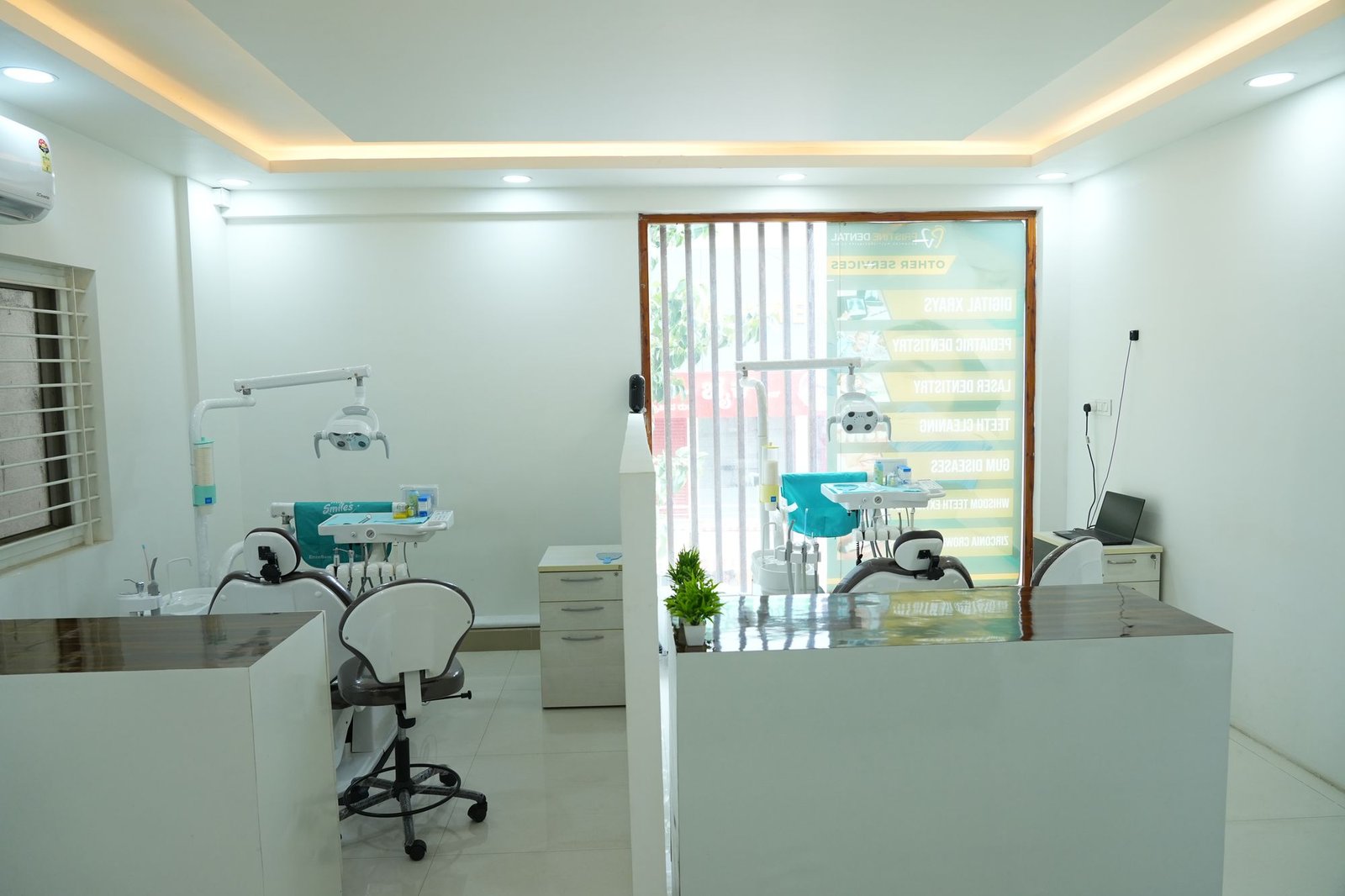
How Often Should You Visit a Dentist? What Happens at a Check-up
Many people only see a dentist when something hurts. Here is how often most people need a check-up, what the dentist does at the visit, and why it is worth going even when your teeth feel fine.
Reviewed by Dr. Athhar Maswood K, BDS, Reg. No. 46747 A, Karnataka State Dental Council
The common rule is to visit the dentist every six months, or twice a year, but there is no single right gap for everyone. Guidance used in the UK says it can be as short as 3 months or as long as 2 years, and your dentist decides based on your oral health. Regular dental visits are part of good dental care, even when nothing hurts. If you are in HSR Layout, Pristine Dental Clinic is open every day until midnight, so a check-up can fit around work.
How often you need a dental check-up
NICE, which writes health guidance for the NHS in the UK, says that after your check-up your dentist will recommend a date for your next visit. The gap could be as short as 3 months or as long as 2 years, or up to 1 year if you are under 18.
NICE says that generally, the lower your risk of dental problems, the longer the gap before your next check-up. The gap can also change over your life, as your teeth, gums or health change.
How your dentist decides the gap
The gap is based on your own risk of dental problems. To judge it, the dentist looks at your teeth, gums and mouth, and asks about your health, your diet, tobacco and alcohol use, and how you clean your teeth. These are the same things NICE lists for every check-up.
So some people need more frequent visits, and others can safely go longer between visits. The gap is not fixed for life. NICE says it may change at different times of your life, depending on your teeth, gums and mouth, or changes in your health or lifestyle. Ask the dentist why they suggest a shorter or longer gap for you.
What happens at a dental check-up
NICE says that at each check-up your dentist should:
examine your teeth, gums and mouth
ask about your general health and any problems you have had with your teeth, mouth or gums since your last visit
ask about and give advice on your diet, tobacco and alcohol use, and how you clean your teeth
discuss a date for your next visit
This examination of your teeth and gums is the main part of every dental visit. At Pristine Dental Clinic, if the dentist needs to see between or under the teeth, an X-ray is taken at the clinic. You hear what was found and what, if anything, needs to be done, with the visits and the cost, before any treatment starts.
Check-up and cleaning: not the same thing
A check-up is an examination. Teeth cleaning, also called a scale and polish, is a separate treatment. NICE lists teeth cleaning, fillings and having a tooth out as other appointments you may have apart from your routine check-up. The dentist will tell you if your teeth need a cleaning. For gum problems, the NHS says your dentist may advise you to get your teeth cleaned by a hygienist, and serious gum disease may need deep cleaning under the gums.
Why to go even when nothing hurts
The NHS says you should have regular dental check-ups even if you do not have any problems. It also says to see a dentist if you have not had a check-up for 2 years, or 1 year if you are under 18.
A check-up is when the dentist looks at every tooth and the gums, not just the one that hurts. And if you do have a problem between check-ups, NICE says to contact your dentist for an earlier appointment rather than waiting.
Gum disease and tooth decay: why regular check-ups matter
The NHS says gum disease is caused by a build-up of plaque on your teeth. Plaque that is not cleaned away builds up and irritates the gums. Signs include gums that bleed when you brush, floss or eat hard food, and gums that become swollen, red and sore. Tooth decay is another common cause of tooth pain, as our guide to tooth pain at night explains.
The NHS lists regular dental check-ups as one of the ways to prevent gum disease, along with brushing, cleaning between your teeth and not smoking. If your gums bleed, swell or hurt, see a dentist rather than waiting for your next routine check-up.
Keeping your teeth and gums healthy between visits
Good oral hygiene at home keeps your teeth and gums healthy between check-ups. The NHS advice is simple:
brush at least twice a day with a fluoride toothpaste
clean between your teeth every day with floss or an interdental brush
There is no single gap for everyone. NICE says your next check-up could be as short as 3 months or as long as 2 years, or up to 1 year if you are under 18. Your dentist recommends the gap for you.
Is a dental check-up every 6 months necessary?
Not for everyone. NICE says the gap depends on your risk of dental problems. People with a lower risk may need a longer gap, and people with a higher risk a shorter one.
What happens during a dental check-up?
The dentist examines your teeth, gums and mouth, asks about your health and any problems, gives advice on diet, tobacco, alcohol and cleaning, and agrees a date for your next visit.
How often should children see a dentist?
NICE says up to 1 year between check-ups for anyone under 18. The dentist may suggest a shorter gap depending on your child's teeth.
How can I prevent gum disease?
The NHS advises brushing with fluoride toothpaste at least twice a day, cleaning between your teeth every day, going for regular dental check-ups and not smoking.
Can I visit a dentist in HSR Layout after work?
Yes. Pristine Dental Clinic in Sector 2, HSR Layout is open every day from 9 am to 12 midnight. Call 090193 67756 to book a time.
Time for a check-up? Call the clinic.
Pristine Dental Clinic, 1703, 19th Main Road, Sector 2, HSR Layout. Open every day, 9 am to 12 midnight.
This article gives general information. It is not a diagnosis and does not replace a check by a dentist. If you have swelling near your eye or neck, or trouble breathing, swallowing or speaking, go to a hospital emergency department straight away.