Dental Implant Steps: What Happens at Each Visit, From First Check to Crown
A dental implant is not done in one sitting. It happens in stages, with healing time in between. Here is what each stage involves, why it takes a few months, and what to ask before you start.
Reviewed by Dr. Athhar Maswood K, BDS, Reg. No. 46747 A, Karnataka State Dental Council
If you have lost a tooth, an implant is one way to replace it. Knowing the steps of the dental implant procedure helps you plan your time and ask the right questions. The longest part is not the treatment itself, it is the healing in between. For how implants are done at Pristine Dental Clinic, see our page on dental implants in HSR Layout.
What a dental implant is
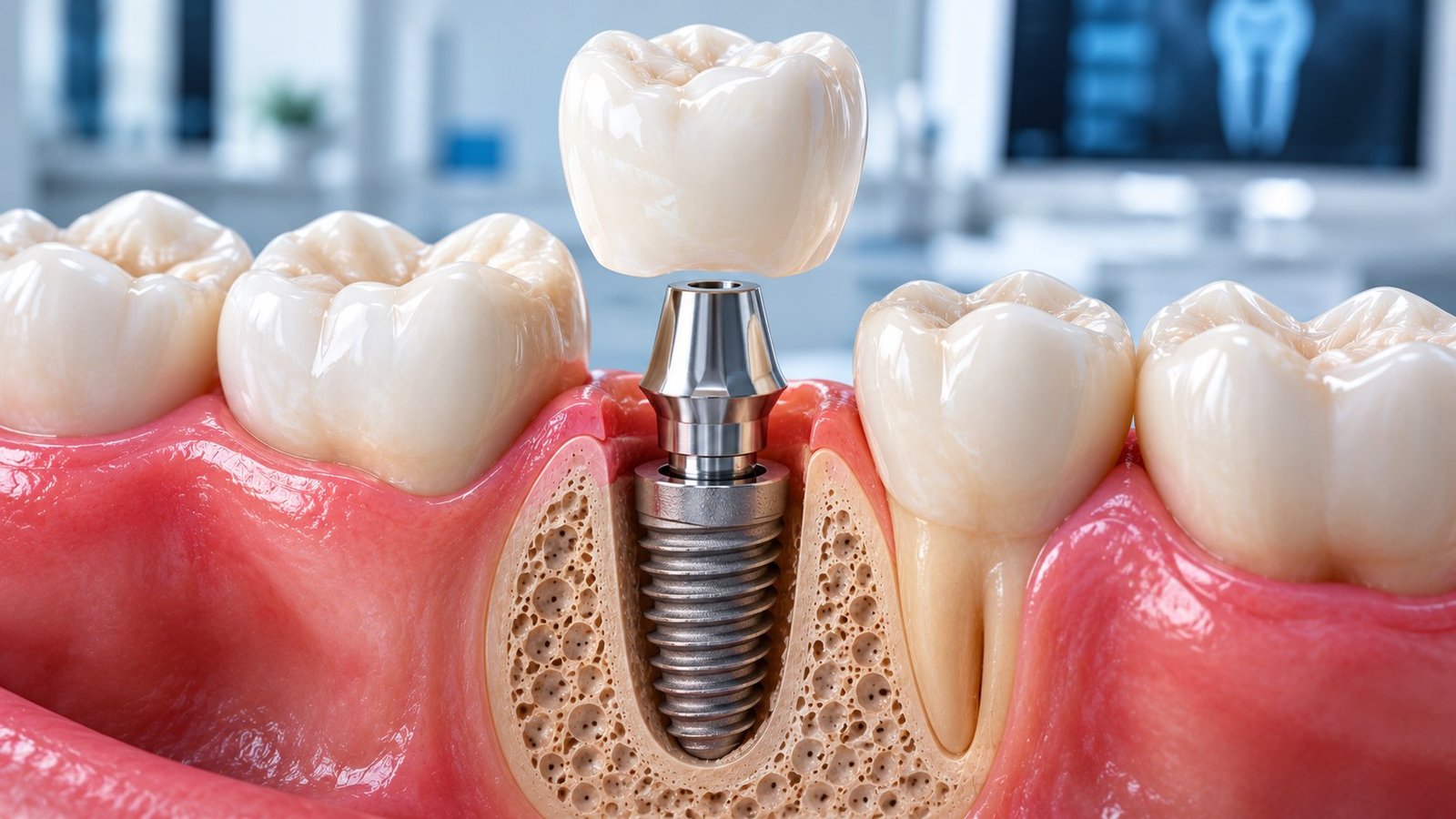
A dental implant is a tooth replacement for a missing tooth. It has three parts:
The post. A small threaded post, usually titanium, placed in the jawbone. It works like a new tooth root.
The abutment. A small connector that screws into the post and sits just above the gum.
The crown. The new tooth that you and others see. Implants can also hold a bridge or a denture.
Step 1: The first consultation and X-ray
The first visit is to find out if an implant suits you. The dentist looks at your mouth, your gums and the space where the tooth was. An X-ray shows how much bone there is, because the post needs enough healthy bone to hold it.
Cleveland Clinic lists things that can make implants a poor choice or need extra care, such as untreated gum disease, a lot of tooth decay, severe bone loss in the jaw, diabetes that is not under control, and smoking. It also says the usual minimum age is 18, because the jaw must have finished growing. Tell the dentist about any health conditions and medicines at this visit.
At the end, you should know the plan, the number of visits and the cost.
Step 2: Dental implant surgery, placing the implant post
The area is numbed first with local anaesthesia. Cleveland Clinic says you should not feel pain during the surgery. The dentist makes a small incision in the gum to expose the bone, prepares a space in the bone, places the post, and closes the incision, often with a few stitches.
If the gap is at the front, you may be given a temporary tooth so that you do not have a gap while it heals. At the back, this is often not needed. The dentist will tell you what to expect for your tooth.
Step 3: Healing, while the bone grows around the post (osseointegration)
This is the stage that takes the most time. The jawbone slowly grows around the post and holds it firmly. This is called osseointegration. Cleveland Clinic says this can take anywhere from three to nine months, depending on how quickly your body heals. The first round of healing, when the gum settles, takes about a week.
During this time, the dentist checks on your progress. You can usually go about your normal day, but follow the care advice you are given, and keep the area clean.
Step 4: The abutment and the crown
Once the post is firm, the abutment is attached, and then the crown is fitted on top. The crown is made to match the shade of your other teeth. Cleveland Clinic says this step usually takes about an hour, and may need a second small procedure on the gum.
After that, you clean the implant like your other teeth, with brushing, cleaning between the teeth, and regular check-ups. Cleveland Clinic says the crown or bridge on an implant may need replacing at some point, so ask the dentist how to look after yours.
Why some people need extra steps first
Not everyone goes straight from the first check to placing the post. Some people need treatment first, for example for gum disease or a tooth that still needs to come out. Others may not have enough bone where the post needs to go. Cleveland Clinic says the dentist may then place a bone graft to build up the bone first. In these cases the plan has more stages and takes longer. The dentist explains this at the first check, so the timeline you hear is the one for you.
Often, yes. Cleveland Clinic says the surgeon closes the incision in the gum with stitches after placing the implant. The dentist tells you how to care for them and when to come back.
How long does the whole dental implant process take?
Usually a few months. Cleveland Clinic says the bone can take three to nine months to grow around the post. If you need treatment first, such as for gum disease, it takes longer. The dentist gives you your own timeline at the first check.
How long do dental implants last?
Cleveland Clinic says implants can last for many years with brushing, flossing and regular dental visits. The crown, bridge or denture on top may need replacing at some point, and it says most crowns and bridges last around 15 years.
Is getting an implant painful?
The area is numbed before the post is placed. Cleveland Clinic says you should not feel pain during the surgery, and the first round of healing takes about a week. The dentist tells you how to care for the area afterwards.
Who may not be suited to an implant?
Cleveland Clinic lists untreated gum disease, a lot of tooth decay, severe bone loss in the jaw, diabetes that is not under control, and smoking as things that can make implants harder. The usual minimum age is 18. A dentist decides after a check.
How do I look after an implant?
Clean it like your other teeth: brush, clean between your teeth, and go for regular check-ups. Tell the dentist if the implant feels loose, or the gum around it bleeds, swells or hurts.
Want to know if an implant suits you? Call the clinic.
Pristine Dental Clinic, 1703, 19th Main Road, Sector 2, HSR Layout. Open every day, 9 am to 12 midnight.
This article gives general information. It is not a diagnosis and does not replace a check by a dentist. If you have swelling near your eye or neck, or trouble breathing, swallowing or speaking, go to a hospital emergency department straight away.